JamLoop
Role: Lead Product Designer, User Experience Design (UX), User Interface Design (UI)
Scope: Product strategy and problem definition, Stakeholder and user interviews, Workflow and system mapping, UX strategy and information architecture, Campaign and order management design, Data visualization, UI and interaction design, Design system and UI kit, Prototyping and usability validation, Cross-functional collaboration
Duration: 2.5 years
Tools: Sketch, LucidCharts
Consolidating a Fragmented Advertising Workflow Into a Unified Campaign Platform
JamLoop is an advertising technology company that helps brands reach streaming audiences through targeted TV advertising.
I led the product design for a digital transformation initiative focused on consolidating JamLoop's fragmented campaign workflow into a unified platform. The work focused on the Orders and Campaigns experience: bringing together the tools, data, and workflows teams relied on to create, manage, and optimize advertising campaigns.
The goal was to replace a process spread across multiple systems with a single workspace that gave teams a clearer view of their campaigns and reduced the manual work required to manage them.
-
![]()
1. Customer Account Information
-
![]()
2. List of Orders
-
![]()
3. Order Dashboard
-
![]()
4. Creating a New Order

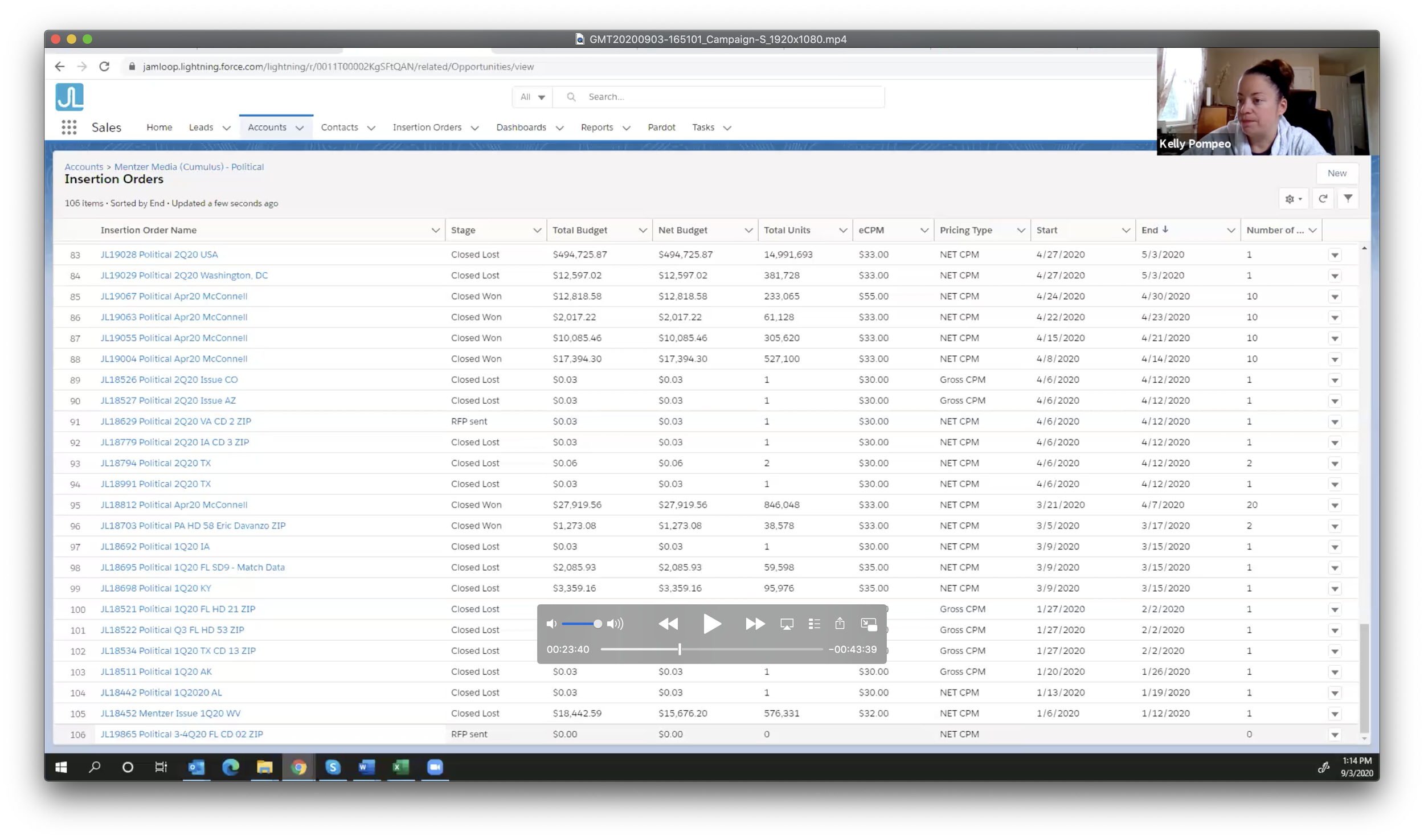
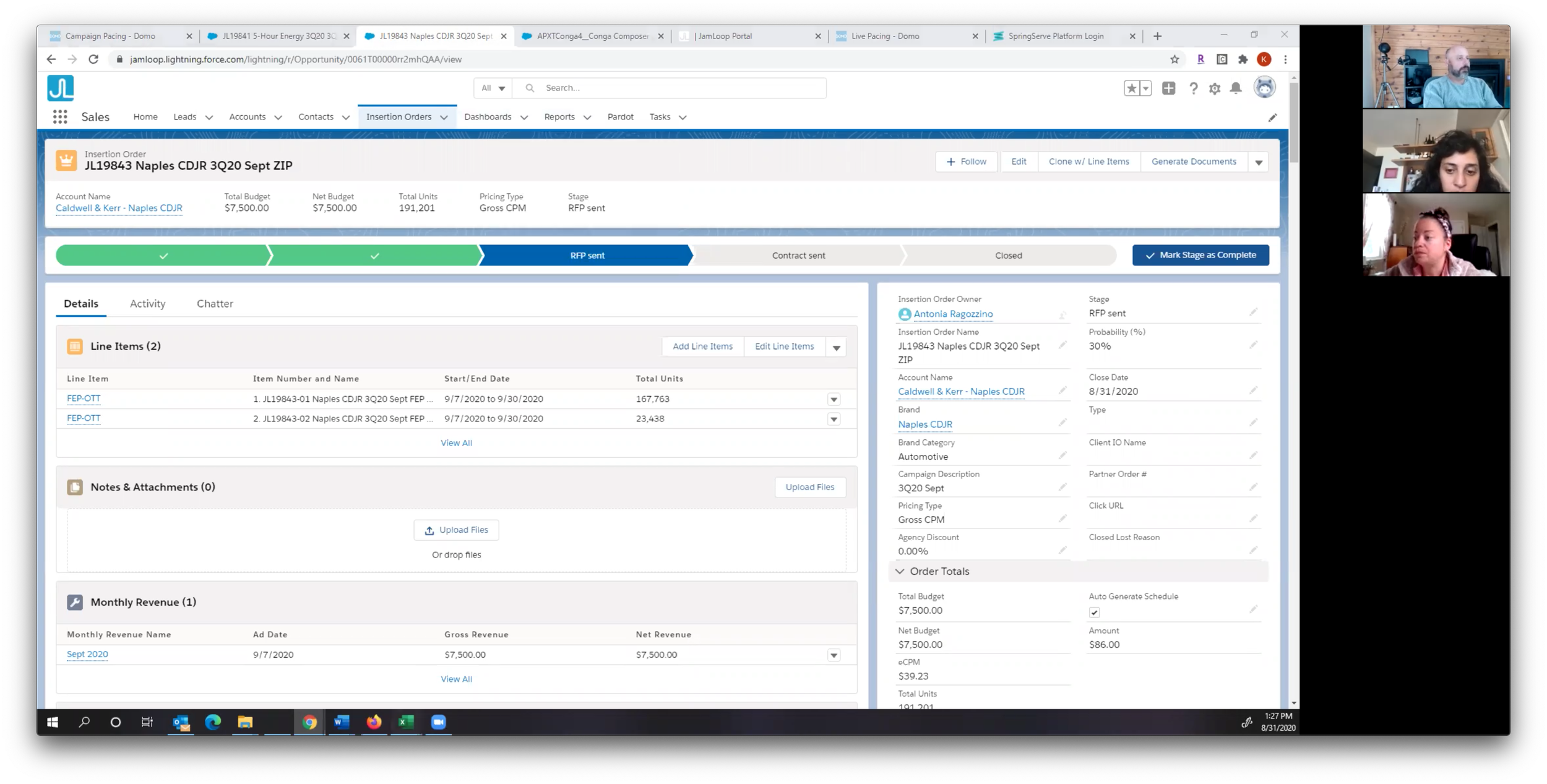
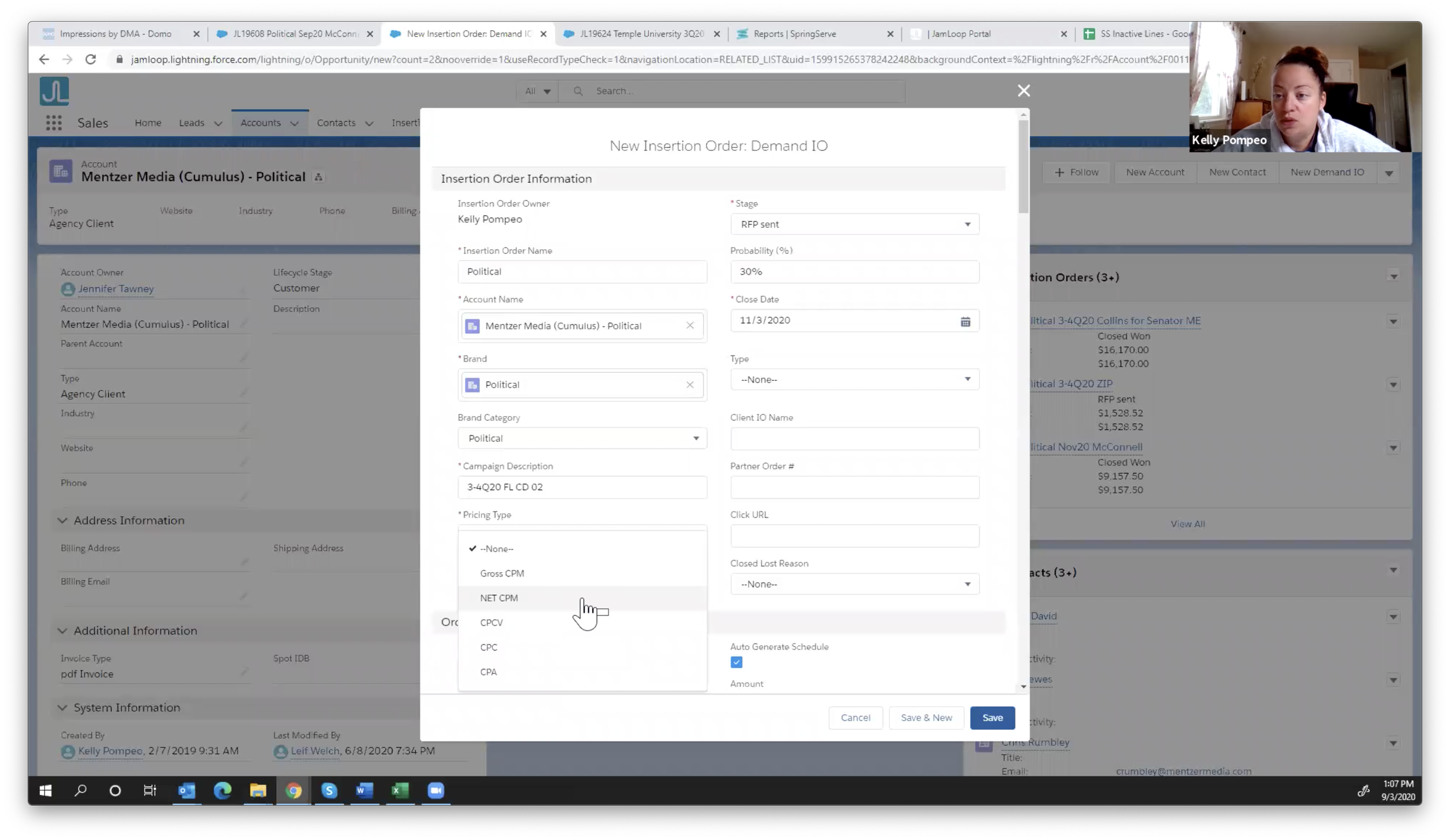
JamLoop's campaign workflow depended on a collection of disconnected tools, including Salesforce, Excel, MediaMint, and Conga Composer. Teams regularly moved information between systems, manually reconciled data, and repeated the same inputs across different parts of the process.
This created three core problems:
A fragmented campaign workflow
Creating and managing a campaign required users to move between multiple systems, making it difficult to maintain a consistent view of an order from initial proposal through to campaign launch and ongoing changes.
Manual data entry and reconciliation
Information had to be entered, transferred, and reformatted across systems. This introduced unnecessary work and increased the risk of inconsistencies in campaign data.
Complex order management
The existing order experience contained a large number of fields and disconnected steps without a clear structure for managing the different parts of a campaign. Important campaign information was also difficult to understand at a glance.
The opportunity was to bring these workflows together without simply recreating the complexity of the existing systems in a new interface.
The Challenge
Designing Around the Campaign Lifecycle
I mapped the end-to-end workflow from creating an account and preparing a proposal through order creation, client approval, campaign launch, and post-launch changes.
Rather than designing each task as a separate experience, I structured the platform around the Order as the central workspace, giving users one place to create, review, and manage the different components of a campaign.
Bringing Multiple Systems Into One Workflow
The new platform was designed to centralize the information users previously gathered across different tools.
Account and client information could be pulled from Salesforce, while campaign configuration, order management, and proposal generation lived within the JamLoop platform.
This reduced the need to repeatedly switch between systems and allowed users to work from a more consistent source of information.
Simplifying the Order Experience
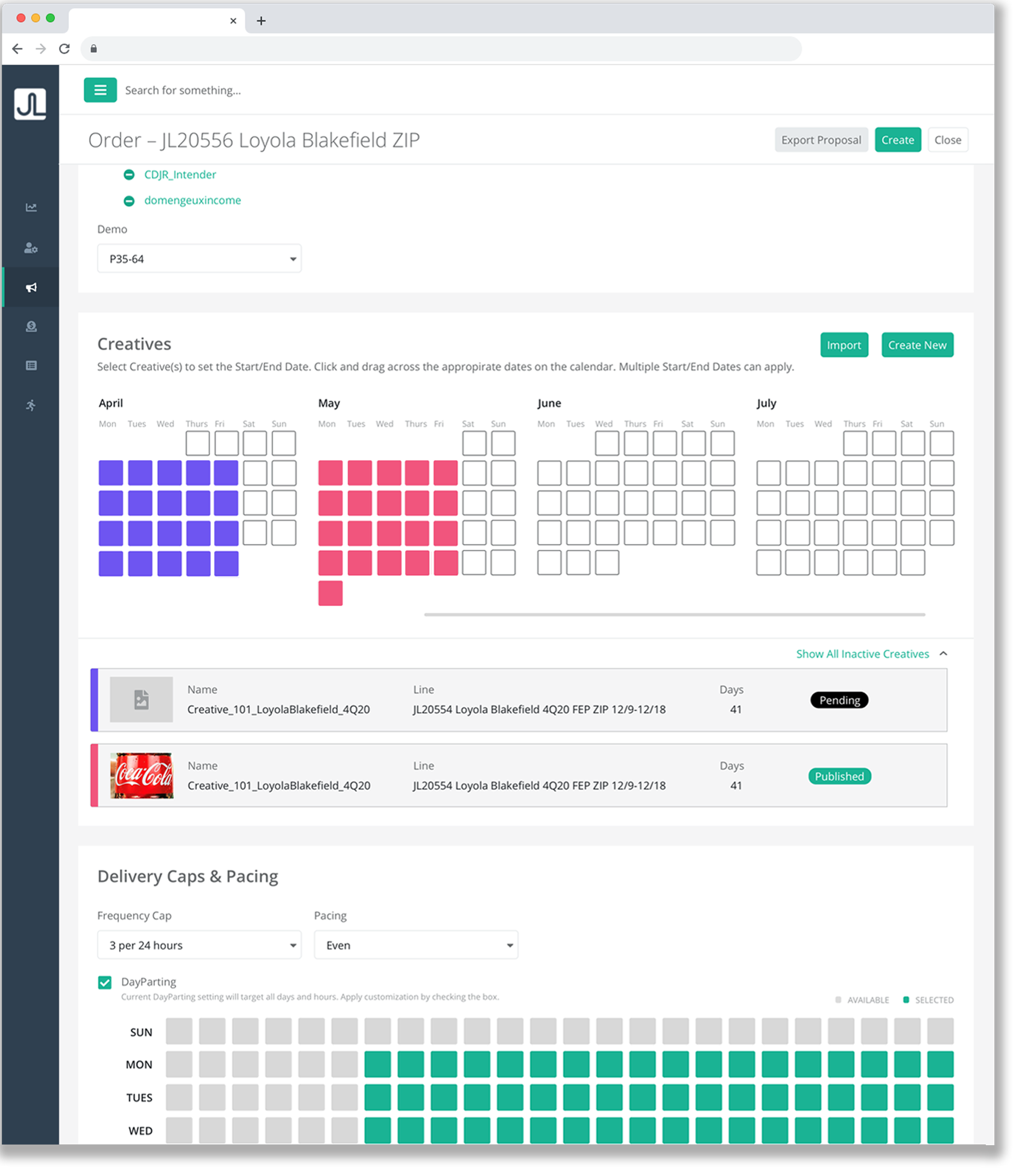
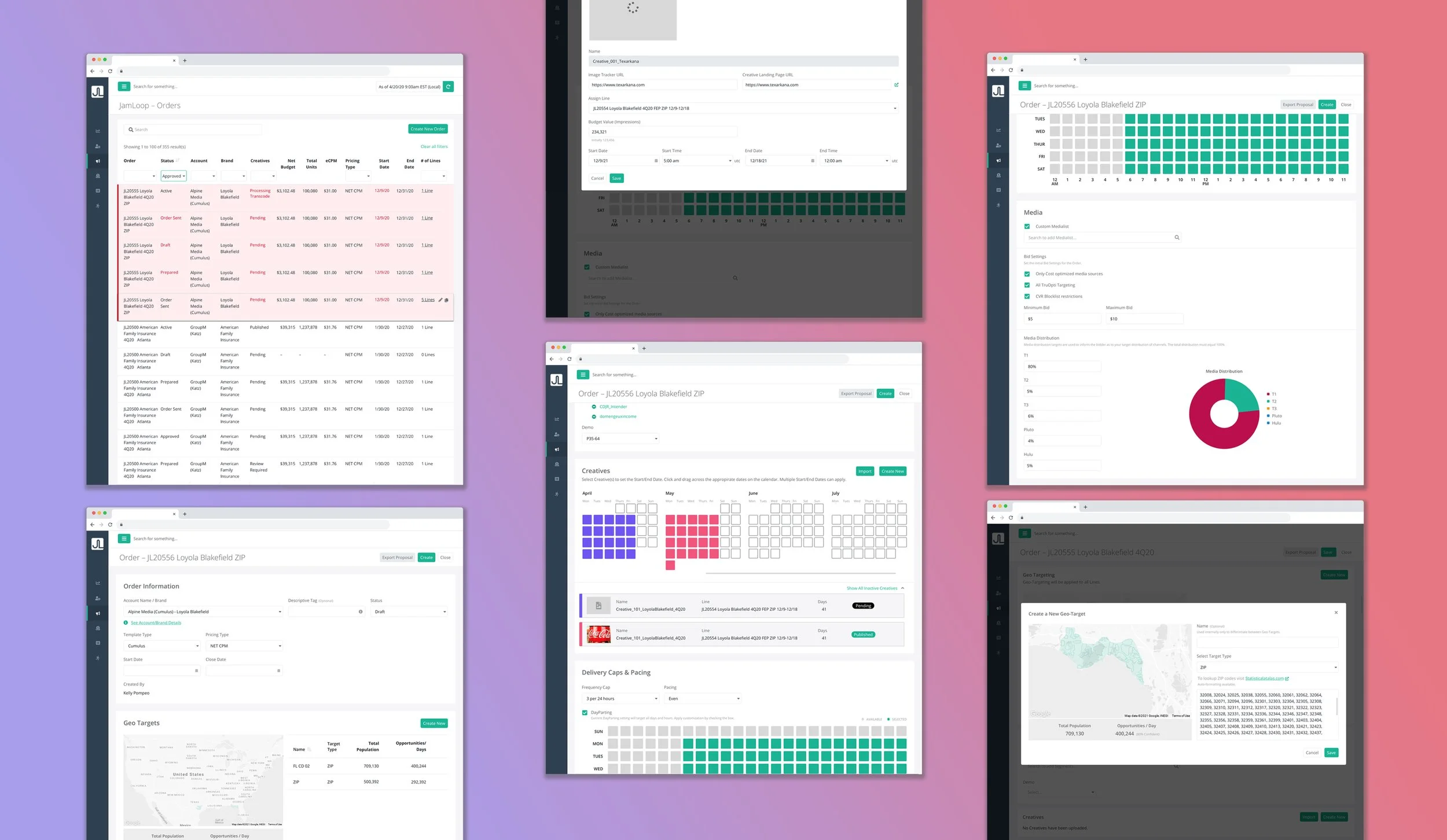
I redesigned the Order experience as a single workspace rather than a collection of disconnected pages.
My Approach
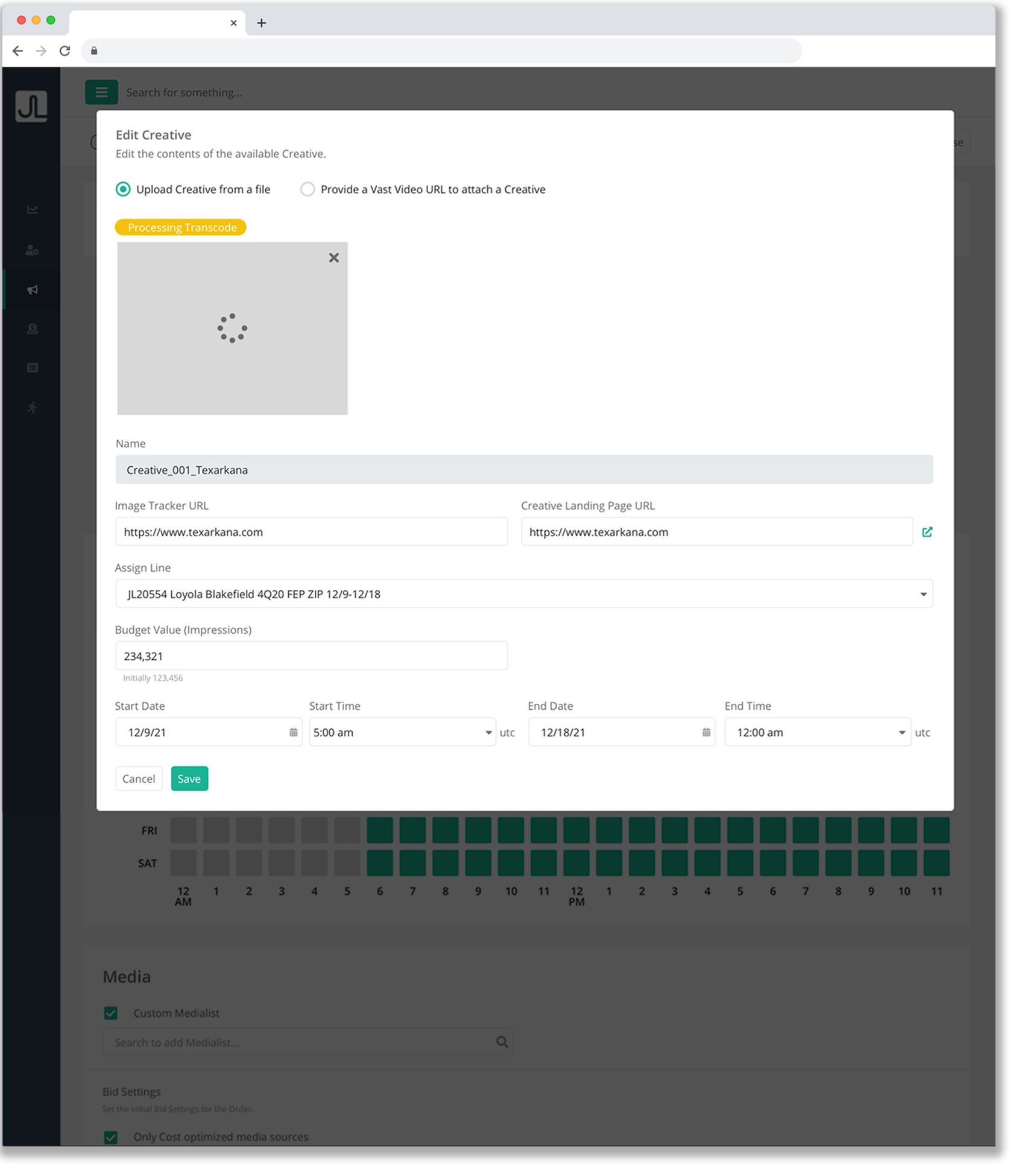
The information was organized into focused panels covering areas such as client information, campaign details, targeting, creatives, delivery, billing, and media distribution.
This allowed users to move through the campaign without losing context while keeping the complexity of the underlying configuration manageable.
Making Campaign Data Easier to Understand
A significant part of the redesign was making complex campaign information visible at the point where users needed to make decisions.
Rather than relying entirely on form fields, the platform introduced visual representations for key campaign parameters such as geo-targeting, audience reach, delivery caps, pacing, and media distribution.
The interface could then surface calculated information alongside the inputs that produced it, reducing the need for users to manually interpret or reconcile data across different systems.
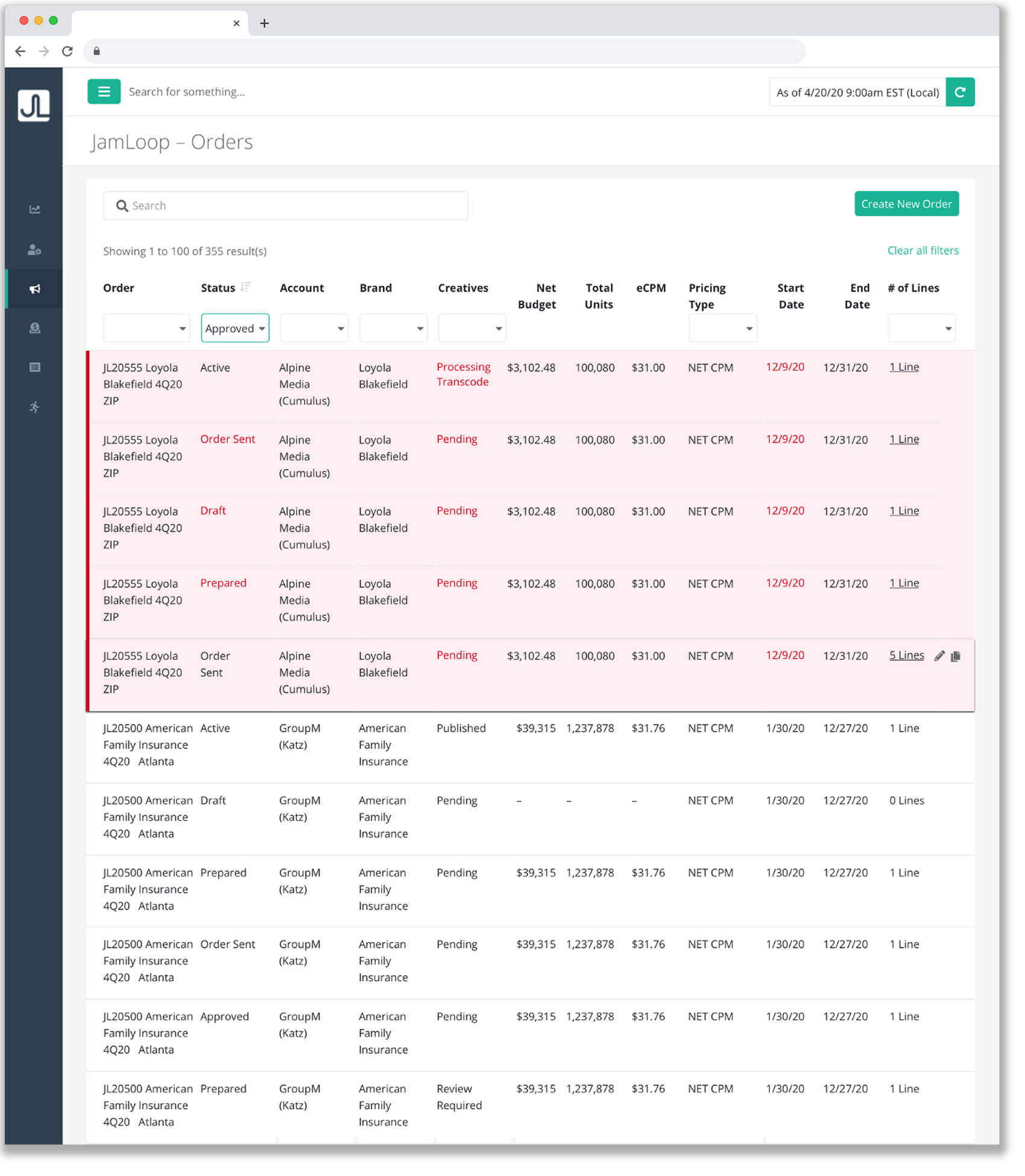
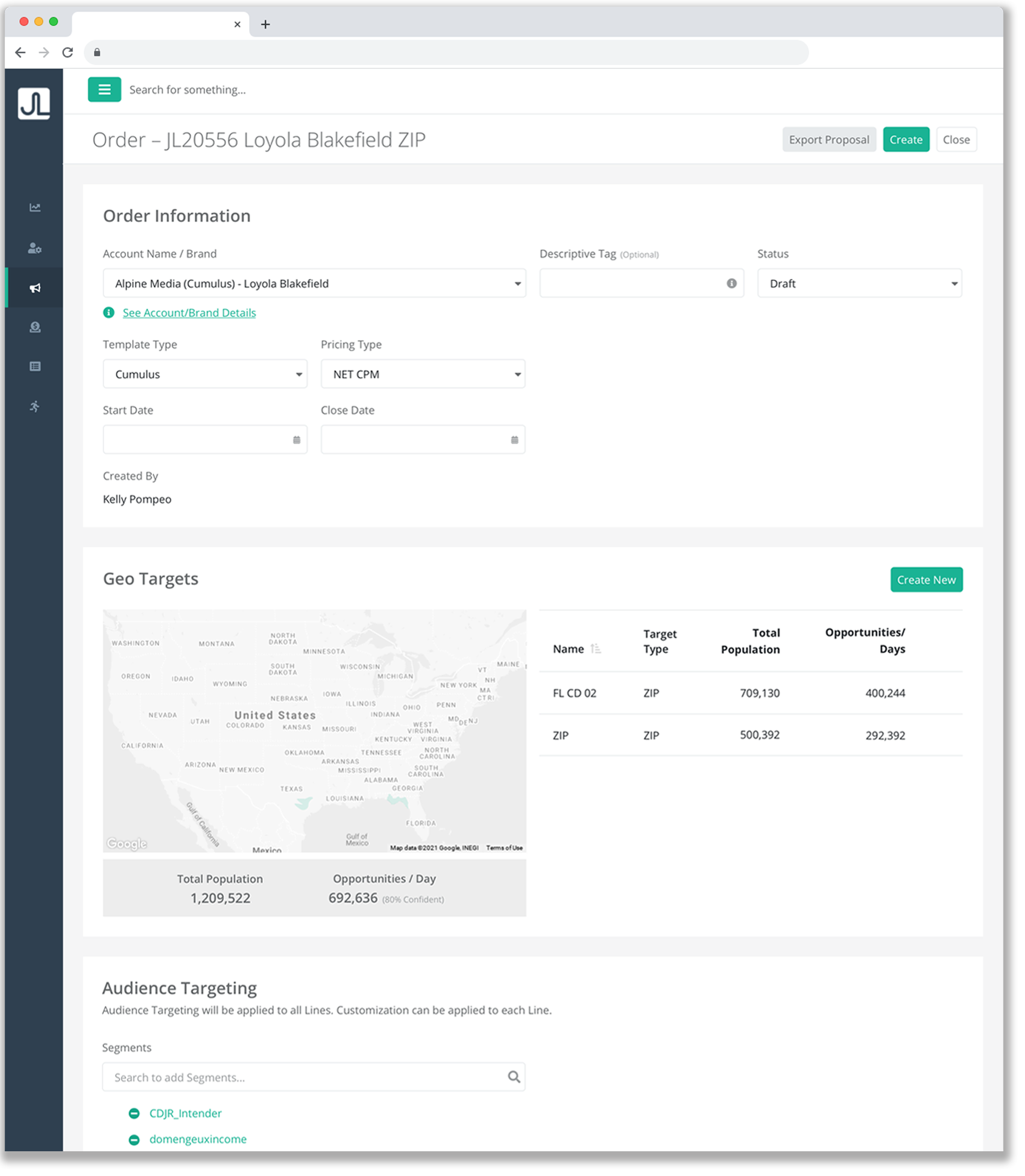

The proposed platform transformed a fragmented campaign workflow into a unified workspace for managing advertising orders.
By bringing campaign creation, data, configuration, and management into one experience, the platform reduced unnecessary system switching, simplified complex workflows, and gave users a clearer view of the information required to build and manage campaigns.
The work established a scalable product foundation for JamLoop's broader digital transformation, moving the experience from a collection of disconnected operational tools toward a cohesive campaign management platform.
The Outcome